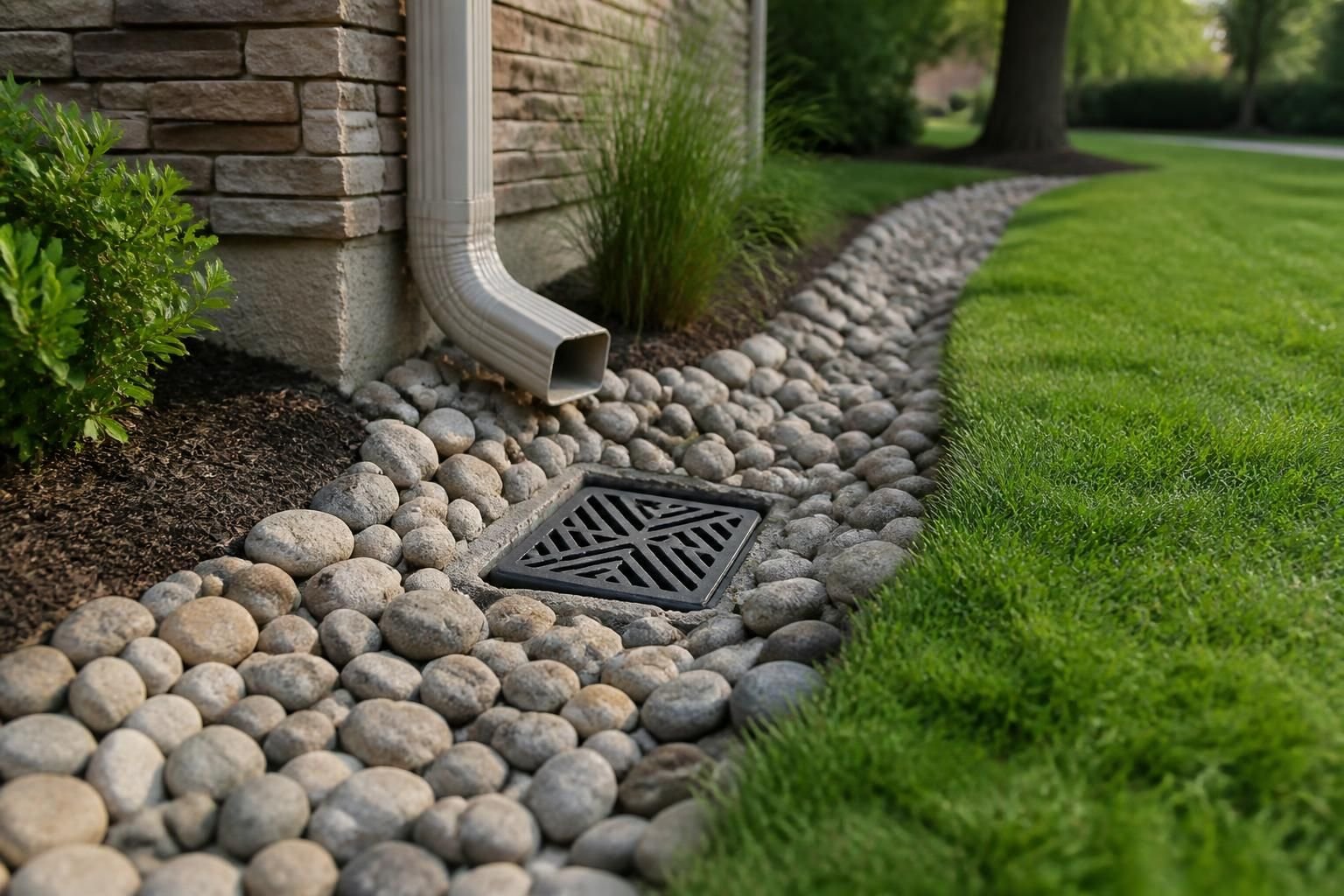
Sugar Land Solid Foundation Repair offers landscape drainage in Sugar Land, TX. Puddles that linger after rain, soggy spots near the slab, and mulch washing out of beds are signs your yard is not moving water the way it should. When runoff keeps collecting near the house, it can add stress to the soil and put more pressure on the foundation.
Sugar Land Solid Foundation Repair helps homeowners across Sugar Land correct drainage problems that feed soil movement and foundation trouble. We look at how water enters the yard, where it collects, and what needs to change so it moves away from the home instead of back toward it.
Landscape drainage problems often show up slowly. You may not notice a major flood, but you will see patterns that keep returning after each heavy rain or irrigation cycle. Those small signs matter because they often point to grading, runoff, or drainage paths that are directing water toward the house.
If you are seeing more than one of these, the problem is likely bigger than a surface puddle. It may be tied to the shape of the yard, the way hardscape sheds water, or the way runoff is gathering around low areas.
Landscape drainage is not just about removing water. It is about guiding water across your property without letting it pool beside the house, erode soil, or soak areas that should stay drier. In Sugar Land, that matters because expansive clay soil reacts strongly to moisture changes. When certain parts of the yard stay saturated and others dry out, the ground can shift unevenly.
We study how rainwater and surface runoff travel across the lot, then identify what is causing the problem. Sometimes the answer is poor grading. Sometimes it is a low spot that catches water. Sometimes the issue is a hard surface, retaining wall, or planted area that blocks the natural path of runoff. A drainage fix should change that path, not just hide the water for a little while.
These are the drainage problems we often look for during a site visit:
Every yard needs a solution matched to the way water is behaving there. Sugar Land Solid Foundation Repair does not take a one-size-fits-all approach. We inspect the property, find the trouble spots, and recommend the drainage work that addresses the cause.
Depending on what we find, landscape drainage may involve grading corrections, runoff redirection, or drainage features that help water move away from sensitive areas. The goal is to reduce pooling, protect soil structure, and keep moisture from concentrating near the home.
When drainage and foundation movement are connected, it makes sense to address both sides of the problem. Water that keeps collecting near the home can make structural movement worse, so solving the yard issue can support the repair work that follows.
A drainage inspection should answer practical questions: Where does the water come from? Where does it stop? Which part of the yard is holding it? We look at the full picture so the fix matches the site conditions.
Sugar Land Solid Foundation Repair checks the areas most likely to affect runoff and soil movement. That includes the slope of the yard, wet spots near the slab, drainage paths around hard surfaces, and places where soil has settled or eroded. We also look for signs that water has been sitting long enough to affect nearby foundation conditions.
During a visit, we may review:
Landscape drainage and foundation performance are closely connected. When water stays near the home, the surrounding clay soil can swell. When that same soil later dries out, it shrinks. That repeated movement can contribute to cracks, sloping floors, and doors that stick.
Good drainage helps reduce those swings. It gives the soil a more balanced moisture pattern and lowers the chance that runoff will keep attacking the same part of the property. For Sugar Land homeowners, that is especially important because slab homes are common and soil movement is one of the main reasons they need attention.
Drainage work often becomes part of a larger plan when we see:
In those situations, the yard problem is not separate from the structural one. Fixing runoff can reduce continued stress on the foundation and help future movement stay more manageable.
Homeowners want clear answers, not vague advice. Our process is built to show what is happening and what needs to change. We start with a free inspection, then explain the conditions we found and the options that fit your property.
That approach keeps the process practical. You get a clear view of the problem, not a generic pitch.
Sugar Land homes sit on clay soil that reacts to changing moisture levels. That soil behavior is a major reason drainage matters here. When runoff concentrates near the home, it can create uneven wetting that leads to uneven movement. The result is often a yard that looks tired and a foundation that starts showing stress.
Drainage work helps interrupt that cycle. By moving water away from sensitive areas and reducing standing moisture, you lower the chance that one part of the property keeps expanding while another shrinks. For many homes, that is the difference between repeating damage and getting the site under control.
Sugar Land gets 46–50 inches of rain a year on flat ground that offers little natural runoff, so water pools against foundations and keeps the clay in a constant wet-dry swing. That standing water is the single biggest driver of foundation movement here. Correcting grading, French drains, and downspout routing pulls water away from the slab and steadies the soil — often the most cost-effective foundation protection a Sugar Land homeowner can make.
If you see standing water, mud, washout, or repeated damp areas near the house, the yard likely needs attention. These signs usually mean runoff is not moving away from the home the way it should.
Yes. When water keeps collecting near the slab, the surrounding clay soil can swell and shrink more aggressively. That movement can contribute to cracks, uneven floors, and other foundation symptoms.
Usually not. If the slope, runoff path, or low spot remains the same, the same water pattern tends to return after each rain or irrigation cycle.
We look at where water comes from, where it stops, how the soil reacts, and whether grade or landscaping is causing the problem. The goal is to understand the full path of the water.
Yes. Redirecting runoff can reduce soil washout, protect planting beds, and limit the damage that repeated water movement causes along slopes or edges.
No. Sugar Land Solid Foundation Repair also looks at related concerns such as foundation inspection, house leveling, slab foundation repair, root barrier installation, and retaining wall construction when those services are part of the solution.
If your yard keeps holding water or your soil seems to move every time the weather changes, it is time to have it checked. Sugar Land Solid Foundation Repair serves Sugar Land homeowners with drainage solutions that are focused on the actual cause, not just the visible symptom.
We provide foundation repair for homeowners across Sugar Land, including Katy, New Territory, and Riverstone.
Call +13464205260 to Schedule an inspection and we will help you fix your foundation problems.

Start With an Inspection
Share the signs you have noticed, and we will help you determine whether the issue points to slab movement, settling, drainage trouble, or another foundation concern.