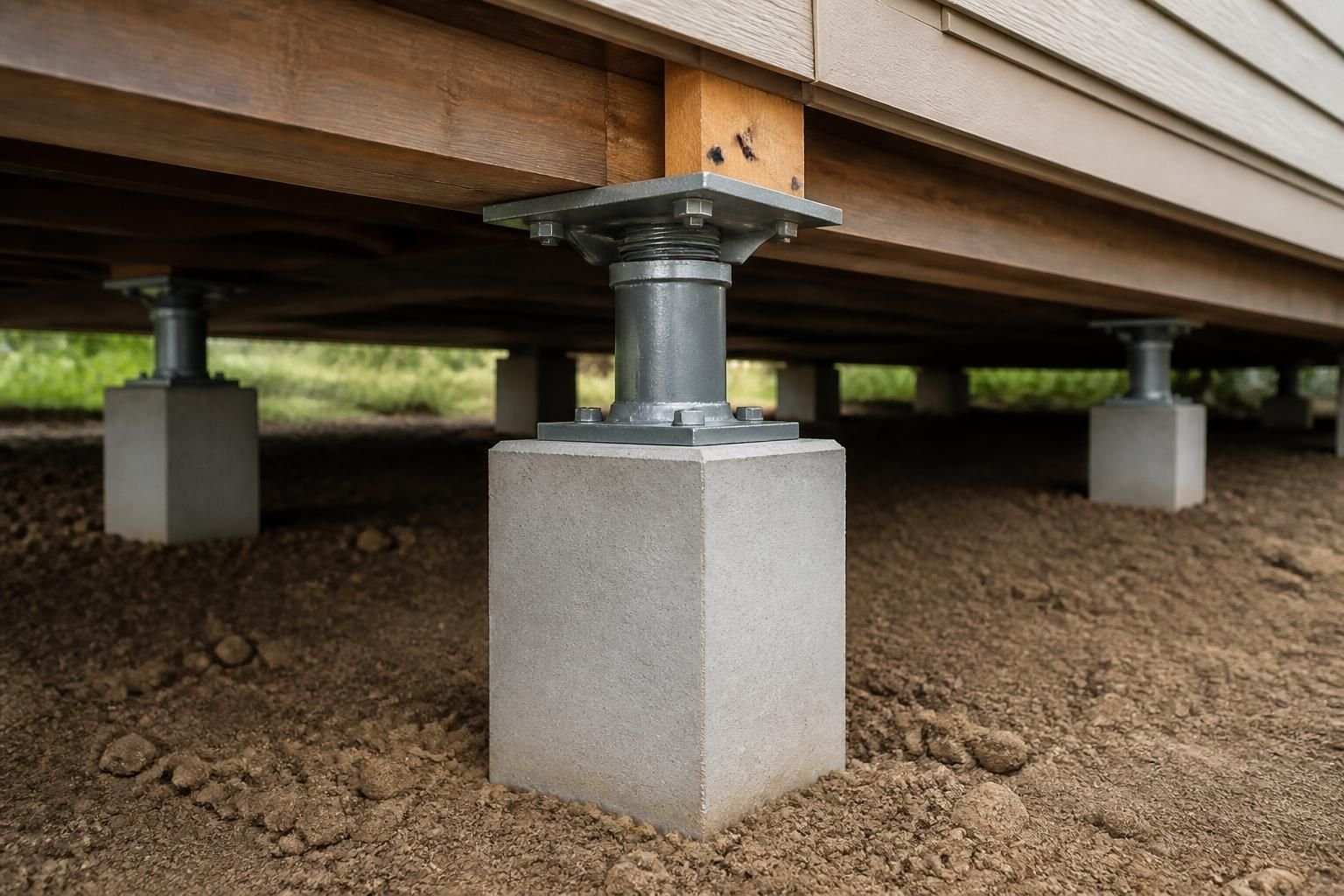
Sugar Land Solid Foundation Repair offers pier installation in Sugar Land, TX. Cracks that keep widening, doors that rub at the frame, and floors that feel uneven are all signs your home may be losing support below the surface. When the slab or pier structure shifts, the changes often start small and then spread through the house.
If you are seeing those warning signs at your Sugar Land property, pier installation can help restore support where the soil has moved. Sugar Land Solid Foundation Repair evaluates the cause, explains what is happening, and recommends a repair plan that matches the structure, the soil, and the amount of settlement involved.
Most foundation movement here starts with the clay soil beneath the home. That soil expands when it takes on water and shrinks as it dries, which can leave parts of the foundation unsupported. When that support is lost, piers may be added to transfer the load to a more stable bearing point below the shifting zone.
Pier installation is often considered when a foundation has settled unevenly, when cracks continue to appear after drainage changes, or when a floor begins to slope enough that daily use becomes uncomfortable. We look at the structure as a whole, not just one crack or one room, so the repair plan addresses the movement pattern rather than a single visible symptom.
Some changes are easy to ignore at first, but they can point to a foundation that is moving more than it should. If several of these show up together, it is worth having the home inspected.
Not every crack means the same thing, but pattern matters. A hairline crack may be cosmetic, while repeating movement across multiple rooms often points to settlement that needs structural support.
Before any pier installation is recommended, we inspect the home to understand how the foundation is behaving and what may be driving the movement. At Sugar Land Solid Foundation Repair, we do not start with a one-size-fits-all answer. We start with the evidence your home gives us.
This process helps homeowners understand not just what is happening, but why it is happening. That clarity matters, because a foundation repair should address the cause of movement, not just cover the symptoms.
Pier systems are used to help stabilize a foundation by moving the load to a deeper, more dependable layer of soil. The right approach depends on the type of home, the level of settlement, and the conditions around the structure.
For slab homes, piers may be installed below the foundation to lift and stabilize settled sections. This is often used when one side of the house has dropped more than the rest or when interior symptoms show that the slab has shifted.
Older homes may rely on pier and beam framing. In those cases, support can be added or adjusted to help level the structure and correct sagging sections. This type of work is useful when the crawl space framing has lost strength or when the beams no longer sit evenly on their supports.
Piers are not placed at random. They are positioned where the foundation needs stronger load support, often near the areas showing the clearest settlement. That measured placement is part of what makes the repair effective over time.
Every foundation settles differently, so the repair approach depends on a few practical factors. We consider the structure, the visible movement, and the soil conditions around the home before recommending a path forward.
If drainage or moisture control is part of the problem, pier installation may be paired with other foundation services such as landscape drainage, root barrier installation, or slab foundation repair. The goal is to reduce the conditions that contributed to settlement so the new support has a better chance to hold.
Homeowners often want to know what happens once the repair starts. While each project is shaped by the structure, the general process is straightforward and focused on support restoration.
Some homes need only a few support points. Others need a broader plan because the movement has spread. Either way, the repair should be based on the actual behavior of the foundation, not a guess.
After pier installation, the structure should have stronger support under the settled areas. That does not mean every visible sign disappears overnight. Cracks, drywall damage, and shifted trim may still need cosmetic attention after the foundation is stabilized.
It also helps to keep an eye on the conditions around the home. If drainage remains poor or moisture keeps changing sharply near the foundation, the soil can continue to create stress. We talk through those conditions so homeowners know what to watch and what might need attention later.
Sugar Land Solid Foundation Repair focuses on lasting structural support, but we also want homeowners to understand how to reduce future movement. That practical guidance is part of a sound repair plan.
The top layer of Beaumont clay in Sugar Land is the "active zone" that swells and shrinks with the seasons. Effective pier installation here means driving or drilling past that reactive layer to reach soil that stays stable year-round, so the home no longer rides the shrink-swell cycle. Because depth to stable stratum varies across Fort Bend — and near the Brazos it can be considerable — we base pier depth on what the soil actually shows at your address.
Piers are often recommended when a foundation has settled enough that added support is needed below the structure. A careful inspection helps determine whether the movement points to pier installation, slab work, drainage correction, or another repair path.
Yes, if the floor unevenness is caused by settlement or loss of support. The key is identifying whether the movement comes from the foundation itself rather than from a finish issue above it.
No. The right support depends on whether the home is slab or pier and beam, how far it has settled, and where the movement is concentrated. The system should match the structure, not a template.
It can stop the movement that causes many cracks, but existing damage may still remain visible. Once the foundation is stabilized, some cracks can be repaired cosmetically if needed.
Very often, yes. Since local soil shifts with moisture, drainage can influence how much a foundation moves. If drainage is contributing to settlement, addressing it can support the repair.
Make a note of any cracks, sticking doors, or floor changes you have noticed, and be ready to show where they started. That gives us a clearer picture of how the movement has progressed.
If your Sugar Land home is showing settlement signs, pier installation may be the support it needs. The sooner the movement is evaluated, the easier it is to understand what is happening and what repair will address it.
Related services include House Leveling.
We serve homeowners across Sugar Land, including Richmond, Rosenberg, and Greatwood.
Call +13464205260 to Schedule an inspection and we will help you fix your foundation problems.

Start With an Inspection
Share the signs you have noticed, and we will help you determine whether the issue points to slab movement, settling, drainage trouble, or another foundation concern.