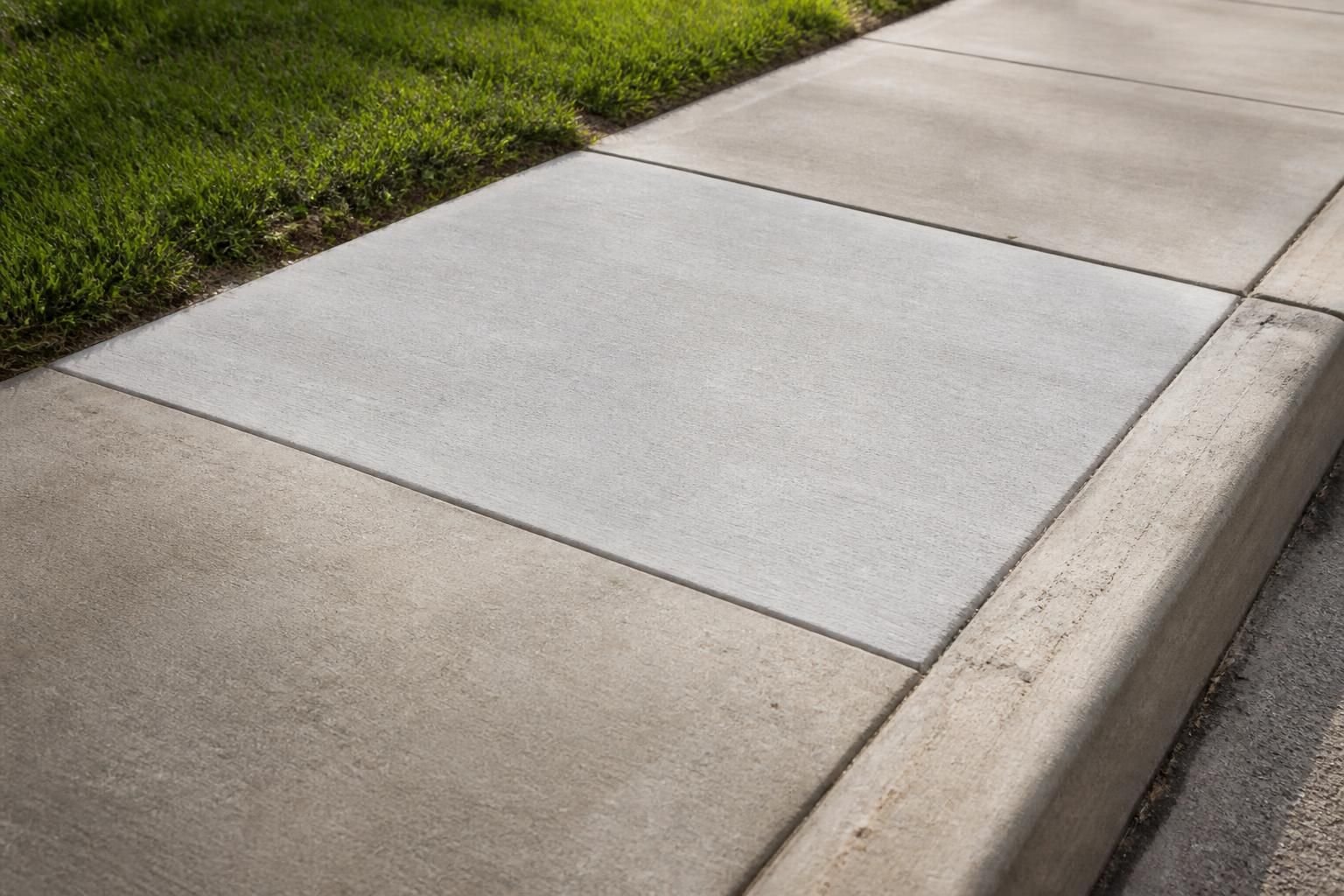
Sugar Land Solid Foundation Repair offers sidewalk repair in Sugar Land, TX. Sidewalk panels that rise, sink, crack, or separate at the joints are more than a cosmetic nuisance. They can catch a foot, collect water, and make the front of your property feel neglected even when the rest of the home is cared for.
If your sidewalk has started to tilt, break apart, or sit unevenly beside driveways, steps, or walkways, Sugar Land Solid Foundation Repair can inspect the cause and recommend a repair path that matches the movement under the slab. In Sugar Land, sidewalk damage often traces back to the same soil changes that affect foundations, so a surface patch alone usually does not last.
A damaged sidewalk often starts with a small line across a panel or a slight lip between sections. Over time, that small change can become a noticeable trip point or a wide crack that lets water and soil shift underneath. When the ground beneath the concrete changes, the sidewalk follows.
Our work looks at the whole picture, not just the visible break. Sugar Land Solid Foundation Repair checks whether the issue comes from settlement, soil movement, drainage patterns, tree root pressure, or movement tied to the nearby foundation. Once we understand the source, we can recommend a repair that addresses the cause rather than masking the surface.
In Sugar Land, clay-heavy soil is often the reason a sidewalk changes shape. That soil swells when it takes on water and shrinks as it dries out, creating pressure and voids that make concrete shift. Even a sturdy slab can move when the support below it changes enough.
Sidewalks can also react to drainage problems, nearby roots, or settlement around adjacent concrete. If one section loses support while the next section stays stable, the result is a raised edge, a sunken panel, or a crack that runs across the walkway. That is why a visible patch may fail if the ground condition is not corrected first.
Clay soil expands and contracts with moisture changes. That movement does not happen evenly, so one part of a sidewalk may rise while another part sinks.
Water that collects beside a walkway can soften support below the slab. Repeated wetting and drying weakens the area under the concrete and makes cracking more likely.
Roots can nudge concrete upward or create pressure that shifts a section out of alignment. In other cases, roots may pull moisture from the soil and contribute to uneven settling nearby.
We start with a free inspection so we can see what the sidewalk is telling us. That means looking at the cracks, the height differences, nearby drainage, and the condition of surrounding concrete and soil. Sugar Land Solid Foundation Repair uses that information to explain what is happening and what kind of repair makes sense for your property.
Some sidewalks need localized repair where a small section has failed. Others need support correction because the concrete is sitting over soil that has shifted. When a sidewalk is part of a larger movement pattern, we discuss that too, so you know whether the problem is isolated or connected to a broader foundation or drainage concern.
Not every damaged sidewalk needs the same solution. A cracked slab, a sunken edge, and a walkway affected by nearby movement may each call for a different fix. The repair method depends on what the concrete is doing and why it moved.
When a sidewalk has split but the sections are still supported, crack repair may help stabilize the surface and reduce further separation. This is most useful when the break is limited and the surrounding slab remains aligned.
For sunken panels or uneven transitions, the goal is to restore a safer walking surface and reduce the lip between sections. If the loss of support is tied to the soil below, the repair plan needs to account for that movement.
When the concrete has shifted because the ground beneath it changed, support correction becomes the important part of the job. This may involve related foundation or soil work so the sidewalk is not left sitting on unstable ground.
Homeowners often notice sidewalk problems while mowing, walking to the front door, or moving trash bins. If you can see the problem from a distance, it has likely already reached the stage where it may affect safety and curb appeal.
You should have the sidewalk checked if you notice any of the following:
These signs often point to movement below the slab, which is why a surface-only fix may not hold up for long. A careful inspection can save you from repeating the same repair over and over.
A sidewalk repair plan depends on more than the visible crack. We look at how the concrete sits, how the soil behaves around it, and whether nearby structures are also showing movement. That helps us choose a solution that fits the actual condition of your property.
Several factors can shape the work:
Sugar Land Solid Foundation Repair keeps the process straightforward. We explain what is happening, what can be fixed at the sidewalk level, and when the problem points to a larger soil or foundation condition that should be addressed at the same time.
Once the sidewalk is repaired, the goal is to help it stay safer and more stable for longer. That often means paying attention to what caused the movement first. If water was pooling nearby, drainage correction may be part of the long-term answer. If soil moisture changes were the main driver, a root barrier may be worth discussing for nearby areas.
We also help homeowners understand what changes to watch after the work is complete. Fresh cracks, new height differences, or renewed separation can signal that the underlying condition still needs attention. Catching those signs early can make a big difference.
Clay soil movement is a major reason. As the soil swells and shrinks, concrete above it can crack, tilt, or separate.
Yes. A single shifted section can create stress at the joints beside it, which may lead to more cracking or height differences nearby.
Not always, but they can be connected. The same soil conditions that affect foundations often affect sidewalks too, so it is worth checking both.
We look for water paths, soft soil areas, stains, and places where runoff collects beside the concrete. Those clues often show whether drainage is contributing to movement.
We inspect the surrounding concrete as well, since movement in one area can affect nearby slabs and create an uneven transition.
If the slab below the crack is still moving, the surface repair can fail again. That usually means the cause under the concrete has not been addressed yet.
If your sidewalk has become uneven, cracked, or hard to walk across, it is time to take a closer look. Sugar Land Solid Foundation Repair provides free inspections for homeowners who want a clear explanation and a practical repair plan.
Related services include Concrete Driveway Repair.
We provide foundation repair for homeowners across Sugar Land, including Stafford, Rosenberg, and Missouri City.
Call +13464205260 to Schedule an inspection and we will help you fix your foundation problems.
Sidewalks sit on the same expansive Beaumont clay as the rest of your Sugar Land lot, but with even less concrete to resist it. Tree roots pulling moisture from the clay, poor surface drainage, and the seasonal shrink-swing all tip and separate walkway panels here. We relevel and stabilize the concrete rather than just patching trip hazards, correcting the soil-moisture conditions common across Sugar Land.

Start With an Inspection
Share the signs you have noticed, and we will help you determine whether the issue points to slab movement, settling, drainage trouble, or another foundation concern.