Sugar Land Solid Foundation Repair wrote this guide for Sugar Land homeowners and the nearby Fort Bend area.
Foundation cracks are one of the most common reasons homeowners in the Sugar Land area pick up the phone. Some cracks are harmless cosmetic lines in drywall or brick mortar; others are early warnings that the slab or beams beneath the house are moving. In a place built on expansive Beaumont clay near the Brazos River and Oyster Creek, that movement is rarely random — it follows the wet-and-dry cycle of our Gulf Coast soil. This guide walks through the real methods used to fix cracked foundations here, how each one works, and how to tell which situation you are dealing with.
Why foundations crack in Sugar Land
Almost every home in Sugar Land, Missouri City, Richmond, and the surrounding Fort Bend communities sits on highly expansive clay often nicknamed “Texas gumbo.” This clay swells when it takes on water during our 46–50 inches of annual rain and shrinks back during dry summers. That constant shrink-swell pushes and pulls on the foundation, and because the moisture is never even across a whole lot, one part of the slab lifts or drops relative to another. The result is cracking — in the slab itself, in brick veneer, in drywall, and around door and window frames. Add a high water table near the river, poor drainage on flat land, and large trees drawing moisture out of the soil, and you have the perfect recipe for foundation cracks. Understanding the cause matters, because a good repair addresses the soil movement, not just the visible crack.
Step one: a proper inspection and diagnosis
No credible crack repair starts without a diagnosis. A foundation inspection measures elevations across the entire slab, checks moisture at the perimeter, and looks at how water drains off your property. This tells us whether a crack is cosmetic or structural, whether the foundation is settling in one area or heaving in another, and how much total movement has occurred. Skipping this step is how homeowners end up paying to patch a crack that reopens six months later. You can read more about the process on our Sugar Land foundation repair homepage.
Method 1: Epoxy and polyurethane crack injection
For cracks in a poured concrete slab or foundation wall that are not tied to ongoing movement, injection is often the right fix. Epoxy injection fills and structurally bonds the crack, restoring much of the concrete’s original strength. Polyurethane injection is more flexible and is used where sealing out water is the priority, such as a crack that lets moisture through. Injection is relatively fast and cost-effective, but it is only a lasting solution when the underlying soil movement has stopped or been corrected. Used on an actively moving foundation, an injected crack will simply crack again nearby.
Method 2: Underpinning with piers
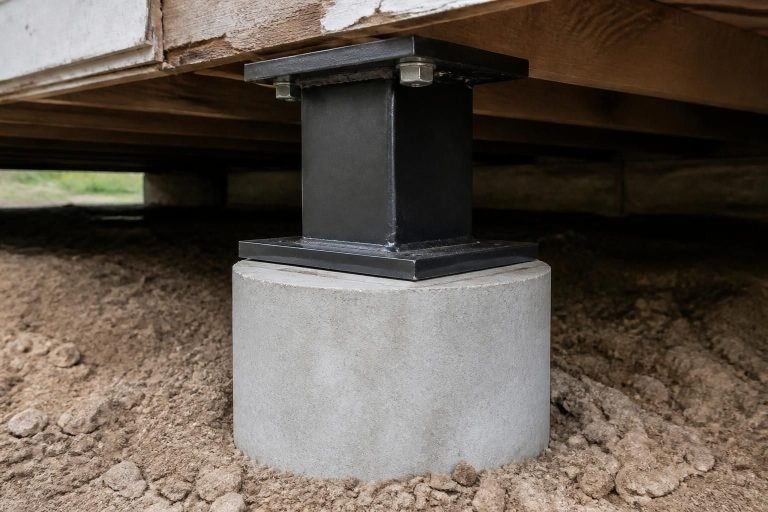
When cracks come from a section of the foundation settling downward, the fix is to support that section on stable soil below the active clay zone. This is pier installation, and it is the workhorse method for structural foundation repair in Sugar Land. Pressed concrete pilings or steel piers are driven down past the shrink-swell layer to soil that stays stable year-round, then the foundation is lifted and secured on them. Because the depth to stable soil varies across Fort Bend — and can be considerable near the Brazos — pier depth is set based on what the soil at your specific address actually shows. Underpinning stabilizes the home so existing cracks stop widening and can then be cosmetically closed.
Method 3: Slab foundation repair and leveling
For the slab-on-grade homes that dominate Sugar Land subdivisions, cracks in floors and walls often mean the slab has flexed or dropped. Slab foundation repair restores support beneath the slab, and where the whole house has gone out of level, house leveling brings it back toward its original elevation. Rather than jacking blindly to a flat number, good leveling accounts for the seasonal soil cycling unique to our clay, so the correction holds. Once the slab is stabilized and level, drywall and brick cracks can be repaired knowing they are far less likely to return.
Method 4: Fixing crawl space and pier-and-beam cracks
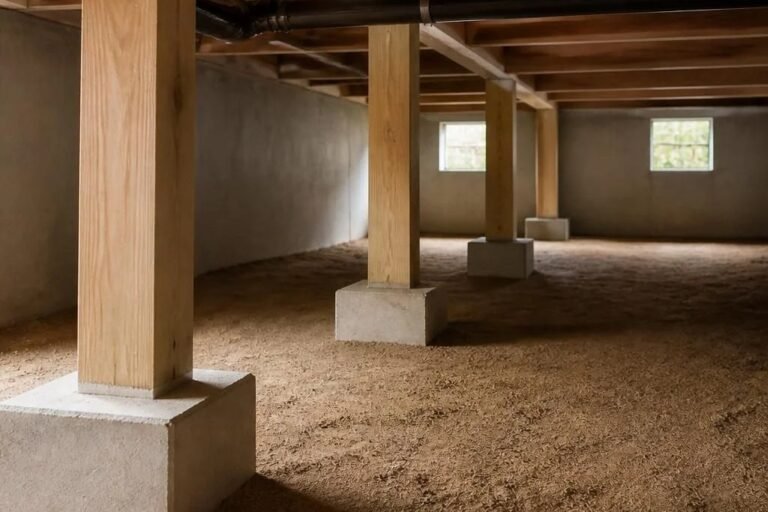
Older homes around Richmond, Stafford, and historic Sugar Land often have pier-and-beam foundations over crawl spaces. Here, cracks and sloping floors usually trace back to shifting piers or moisture-damaged beams — and our high water table keeps those crawl spaces damp. Crawl space repair re-supports the framing, replaces compromised wood, and controls the moisture that our soil and climate keep pushing in. It is a different toolkit from slab work, which is why diagnosis matters so much.
Method 5: Correcting drainage — the method people forget
Many foundation cracks in Sugar Land are really a drainage problem in disguise. With flat terrain, heavy rainfall, and slow-draining clay, water pools against foundations and keeps the soil in a constant wet-dry swing. Landscape drainage — corrected grading, French drains, and downspout routing — pulls water away from the slab and steadies the soil. On its own it will not lift a settled foundation, but paired with structural repair it is often the difference between a fix that lasts and one that fails again. It is also the most cost-effective preventive step a homeowner can take.
Which method is right for your home?
The honest answer is that it depends on the diagnosis. A hairline drywall crack over a door may need nothing more than monitoring; a stair-step crack in brick with sticking doors points to structural settlement that needs piers; a leaking wall crack calls for injection plus drainage. Most real-world repairs in Sugar Land combine methods — for example, piers to stabilize the home, then crack injection or cosmetic repair, then drainage improvements to keep it from happening again. That is why a trustworthy contractor leads with an inspection and a clear explanation rather than a one-size quote.
How to tell if a crack is serious
A few practical signs raise the concern level: cracks wider than about a quarter inch, cracks that run diagonally from the corners of doors and windows, stair-step cracks in brick or block, gaps opening between walls and ceilings, doors and windows that suddenly stick, and cracks that keep growing week to week. Any of these in a Sugar Land home is worth a professional look, because our clay tends to make small problems bigger with each seasonal cycle. Catching movement early almost always means a smaller, less expensive repair.
What crack repair costs in Sugar Land
Cost depends entirely on the method the diagnosis calls for. Simple epoxy or polyurethane crack injection is usually the least expensive route because it addresses the crack alone. Structural underpinning with piers is priced per pier, so the total depends on how many the settled section needs and how deep they must go to reach stable soil beneath the active clay — near the Brazos, that depth can drive cost up. Slab repair and leveling fall in between, while drainage corrections are often modest by comparison and pay for themselves by preventing repeat movement. A reputable Sugar Land contractor gives you a written scope tied to the inspection findings, not a flat guess over the phone, and explains which portions are structural versus cosmetic so you can prioritize your budget.
Frequently asked questions
Are all foundation cracks a problem? No. Thin, stable hairline cracks in drywall or mortar are often cosmetic. It is the width, direction, and whether a crack keeps growing that separate cosmetic from structural — which is exactly what an inspection determines.
Can I just fill the crack myself? You can seal a cosmetic crack, but if the foundation is still moving it will reopen. Filler treats the symptom; the soil movement is the cause. That is why lasting repairs pair crack work with stabilization and drainage.
How fast should I act? Sooner is cheaper. Our expansive clay tends to worsen movement with each wet-dry season, so a small settlement caught early usually needs fewer piers and less repair than the same problem a year later.
Related services in Sugar Land
Explore our foundation inspection, slab foundation repair, pier installation, and drainage services, or return to our Sugar Land foundation repair home page. We help homeowners across Sugar Land, Missouri City, Richmond, Katy, and neighboring Fort Bend communities.
Call +13464205260 to Schedule an inspection and we will help you fix your foundation problems.