Sugar Land Solid Foundation Repair wrote this guide for Sugar Land homeowners and the nearby Fort Bend area.
While most newer Sugar Land subdivisions are built on concrete slabs, a large share of the area’s older and historic homes — especially around Richmond, Stafford, and the original neighborhoods near Oyster Creek — sit on pier-and-beam foundations. These raised foundations behave very differently from slabs, and so do their repairs. If you own a pier-and-beam home in Fort Bend County, this complete guide explains how the system works, what goes wrong with it on our expansive clay, how repairs are done, and how to keep small problems from becoming big ones.
What is a pier-and-beam foundation?
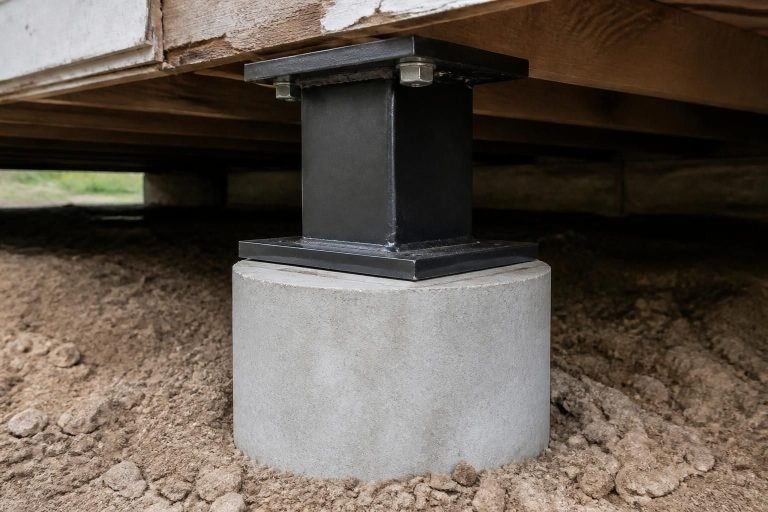
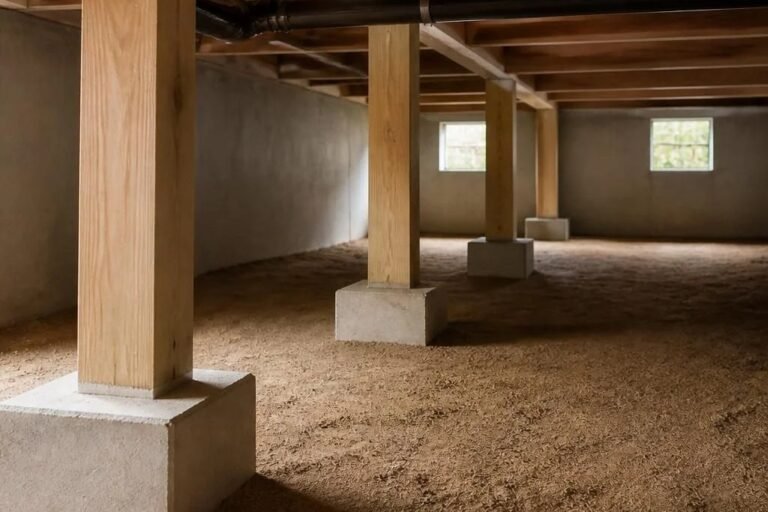
A pier-and-beam (also called pier-and-girder) foundation raises the house off the ground on a grid of piers. Concrete or masonry piers carry wooden beams (girders), the beams carry floor joists, and the joists carry the subfloor. Between the ground and the floor is a crawl space — usually 18 inches to a few feet high. That gap is the defining feature: it puts air, plumbing, and access beneath your floors instead of encasing them in concrete. In Sugar Land, this was the standard building method for decades before slab-on-grade took over, which is why so many pre-1970s homes still have it.
Why homeowners still value pier-and-beam
Pier-and-beam has real advantages, particularly in our climate. The crawl space gives easy access to plumbing and wiring, so repairs rarely require breaking through a slab. The elevation lifts living space above minor flooding — a genuine benefit in flood-prone Fort Bend. And because the system is built from adjustable components, a settled pier-and-beam home can often be brought back to level more gently than a slab. The trade-off is maintenance: the wood and the crawl space need attention, especially given our high water table.
How Sugar Land soil affects pier-and-beam homes
The same expansive Beaumont clay that troubles slabs also moves the piers under a raised foundation. When the clay swells after heavy rain it can push individual piers upward; when it shrinks in a dry summer, piers can settle. Because each pier can move independently, the result is often a wavy, uneven floor rather than one uniform tilt. Near the Brazos River and Oyster Creek, a chronically high water table keeps crawl spaces damp, and that moisture is the second major enemy — it rots beams, warps joists, and invites mold and wood-destroying insects. Understanding both forces — soil movement and moisture — is the key to lasting repair. You can learn more about our approach on the Sugar Land foundation repair home page.
Signs your pier-and-beam foundation needs repair
Common warning signs include floors that sag, bounce, or feel uneven as you walk across them; gaps between the floor and baseboards; interior doors that stick or swing open on their own; cracks in walls, especially over doorways; a musty smell from the crawl space; and visible sagging along the middle of the house where a central beam has dropped. Because the crawl space is accessible, many of these problems can be confirmed directly — one reason a proper foundation inspection of a pier-and-beam home includes going under the house, not just measuring floors from above.
How pier-and-beam repair works
Repair depends on what the inspection finds, but most jobs involve some combination of the following. Re-shimming or adjusting piers corrects minor settlement by adding shims to bring beams back to level. Replacing failed piers is needed where the original piers have cracked, deteriorated, or were never deep enough; new piers are set to reach stable support. Installing additional piers reduces the span between supports where beams have sagged. Sistering or replacing beams and joists restores the wooden structure where moisture or insects have compromised it. In more serious cases, deep pier installation drives supports below the active clay zone for long-term stability. Our broader crawl space repair service brings these steps together and addresses the moisture that caused the damage.
The role of moisture and drainage
You cannot fix a pier-and-beam home for good without controlling water. In Sugar Land’s 46–50 inches of annual rain, poor grading sends runoff straight into the crawl space, where it sits on flat clay and keeps everything damp. A durable repair pairs structural work with landscape drainage — regrading, French drains, gutter and downspout routing, and sometimes a vapor barrier or improved crawl-space ventilation. Keeping the crawl space dry protects the new beams and piers and slows the shrink-swell of the soil beneath them.
Pier-and-beam vs. slab repair
Homeowners often ask which foundation is “better.” Neither is universally superior; they simply fail and get repaired differently. A slab problem is corrected mostly from outside, by underpinning with piers, and is often addressed alongside slab foundation repair and house leveling. A pier-and-beam problem is usually corrected from underneath, adjusting or replacing the supports and wood directly. The accessibility of pier-and-beam can make targeted repairs less disruptive, while its wood components demand ongoing moisture control that slabs do not.
What repair costs and how long it takes
Cost depends on how many piers need adjustment or replacement, how much beam and joist work is required, and whether drainage improvements are added. Simple re-leveling with shims is at the lower end; extensive beam replacement and new deep piers cost more. Timelines usually run from a couple of days for straightforward adjustments to a week or more for larger structural and moisture work. Because the crawl space is accessible, homeowners can often stay in the home during repairs. A reputable Sugar Land contractor provides a written scope after inspecting the crawl space rather than quoting blind.
Maintaining your pier-and-beam home
A few habits go a long way in Fort Bend: keep gutters clean and direct downspouts well away from the perimeter, maintain consistent soil moisture during drought rather than letting the clay dry hard, keep crawl-space vents clear, watch for plumbing leaks that saturate the soil, and have the crawl space checked periodically for moisture, wood decay, and pier movement. Catching a dropping pier or a damp beam early keeps the repair small.
Choosing a pier-and-beam repair contractor in Sugar Land
Not every foundation company works comfortably under a house. Because pier-and-beam repair happens in the crawl space, look for a Sugar Land contractor who physically inspects beneath the home, photographs the piers and beams, and explains exactly which supports are moving and which wood is compromised. Be cautious of quotes given without a crawl-space inspection, or proposals that address the floors without a word about drainage — on our clay and high water table, ignoring moisture almost guarantees a repeat. A trustworthy scope will separate structural work from moisture control and give you a clear, written explanation of both.
Frequently asked questions
Can a pier-and-beam house be releveled? Yes, and often more gently than a slab. Because the supports are adjustable, shimming and pier work can bring floors back toward level without the heavier underpinning a slab requires.
Is a wavy floor always structural? Usually it points to individual piers moving or a beam sagging. An inspection under the house confirms whether it is a support issue, moisture-damaged wood, or both.
Do I need to leave during repairs? Most of the time, no. Since the work is done from the crawl space, homeowners can typically remain in the house while piers are adjusted and beams are reinforced.
Related services in Sugar Land
Learn more about our crawl space repair, pier installation, foundation inspection, and drainage services, or visit our Sugar Land foundation repair home page. We serve pier-and-beam and slab homes across Sugar Land, Richmond, Stafford, Missouri City, and the wider Fort Bend area.
Call +13464205260 to Schedule an inspection and we will help you fix your foundation problems.